Meaning of Meekness in the Bible: A Deep Spiritual Guide
Have you ever heard the word meekness and thought it meant weakness? Many people do. In today’s world, strength often looks like power, dominance, and control. So when the Bible speaks about meekness in the Bible, it can feel confusing or even unrealistic.
But what if meekness is not weakness at all?
What if it is actually one of the strongest spiritual postures a person can hold before God?
The meaning of meekness in the Bible goes far deeper than personality traits. It describes a heart fully surrendered to God, strong under control, and anchored in humility. In fact, many of the greatest biblical figures—like Moses, David, and even Jesus—demonstrated true meekness.
In this article, you will discover the real biblical meaning, Hebrew roots, scriptural examples, and how meekness can transform your spiritual life today. By the end, you will see meekness not as weakness—but as divine strength under God’s authority.
📖 What is Meekness in the Bible? (Simple Definition)
To define meekness in the Bible, we must go beyond modern language.
Biblical meaning of meekness:
- A humble submission to God
- A gentle spirit under control
- A strength that refuses pride and revenge
- A willingness to trust God’s timing and justice
So when someone asks, “what does meekness mean in the Bible?”, the answer is:
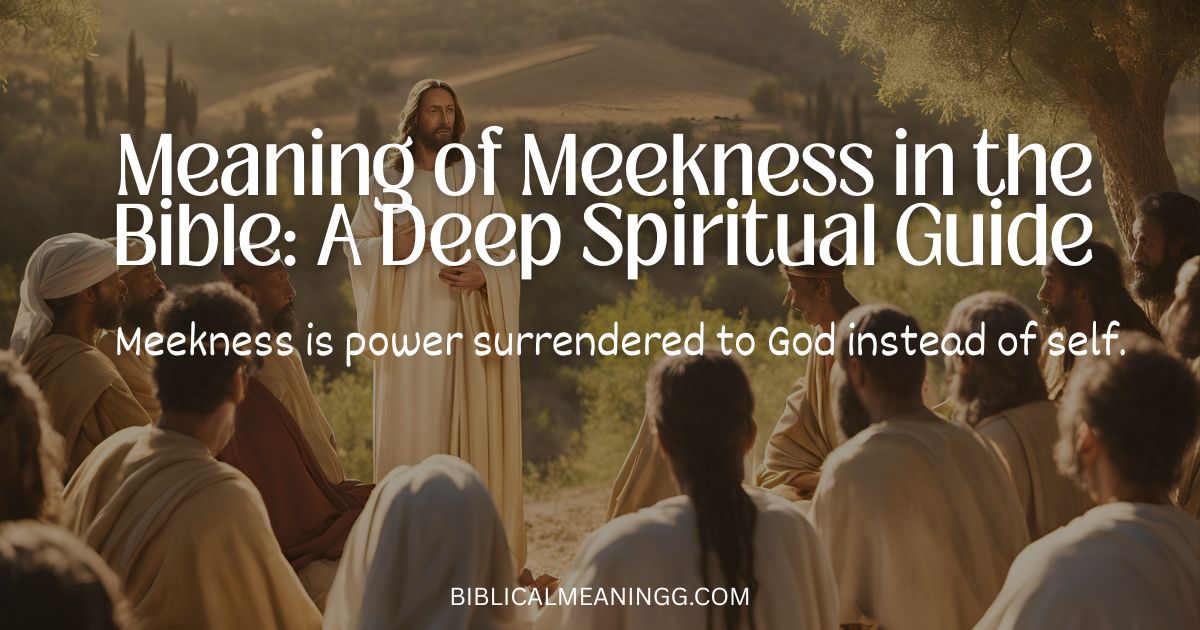
Meekness is power surrendered to God instead of self.
It is not passivity. It is controlled strength guided by faith.
Quick clarity:
- Meekness is not weakness
- Meekness is not fear
- Meekness is not silence in injustice
Instead, it is strength that chooses obedience over ego.
🧬 Hebrew & Original Meaning of Meekness
To fully understand the Hebrew meaning of meekness in the Bible, we must look at key original words.
1. Hebrew word: Anav (עָנָו)
This is the most important Hebrew root.
It means:
- Humble
- Lowly in spirit
- Gentle under pressure
- Dependent on God
However, anav does not mean poor self-esteem. It means a person who knows their strength but submits it to God.
2. Greek word: Praus (πραΰς)
In the New Testament, meekness is often translated from praus.
It means:
- Mild strength
- Controlled power
- Calm authority
Spiritual insight:
Meekness in biblical language describes someone who is strong enough to fight—but chooses peace because they trust God.
For example, a warrior who lays down revenge not because he cannot fight, but because he trusts divine justice.
📜 Biblical Foundation of Meekness
The definition of meekness in the Bible is deeply rooted in Scripture. It appears across both Old and New Testaments.
Let’s explore how key biblical figures demonstrate it.
🌿 Abraham: Meekness through surrender
Abraham showed meekness when God asked him to leave everything familiar.
- He left his homeland without full answers
- He trusted God’s covenant promise
- He did not argue with divine instruction
His meekness was seen in obedience.
🌿 Moses: The meekest man on earth
The Bible describes Moses as:
“Very meek, above all the men on the face of the earth” (Numbers 12:3)
Yet Moses was not weak.
He:
- Confronted Pharaoh
- Led a nation
- Spoke directly with God
His meekness meant:
- He did not defend himself when criticized
- He allowed God to defend his position
- He remained humble despite authority
🌿 David: Strength under emotional control
David had power to kill Saul but refused.
- He respected God’s anointed king
- He waited for divine timing
- He refused revenge
This is biblical meekness in action.
🌿 Jesus Christ: The perfect example of meekness
Jesus said:
“I am meek and lowly in heart.” (Matthew 11:29)
Yet He:
- Healed the sick
- Commanded nature
- Overturned temple tables
His meekness was not softness—it was controlled divine authority.
📚 Scriptural Examples of Meekness (With Meaning)
1. Jesus and the Roman soldiers
When Jesus was arrested, He did not resist.
Situation:
Armed soldiers came to capture Him.
Meaning:
He had power to stop it instantly.
Lesson:
Meekness is choosing God’s will over personal defense.
2. Moses and the rebellion of Israel
When Israelites complained, Moses did not retaliate.
Situation:
People questioned his leadership.
Meaning:
He trusted God to defend him.
Lesson:
Meekness avoids unnecessary pride battles.
3. David and King Saul
David refused to harm Saul even when he had the chance.
Situation:
Saul tried to kill David multiple times.
Meaning:
David respected God’s authority.
Lesson:
Meekness waits for God’s justice.
🎯 Purpose of Meekness in the Bible
The meaning of meekness in the Bible serves three major spiritual purposes:
1. To glorify God
Meekness removes self-glory and highlights God’s power.
2. To teach spiritual truth
It shows that strength without humility leads to destruction.
3. To strengthen faith
Meekness builds trust in God’s timing and justice.
🧩 Multi-Layered Meaning of Meekness
📜 Historical meaning
In ancient culture, meekness described trained animals—strong but controlled.
📖 Biblical/theological meaning
Meekness represents submission to God’s covenant authority.
💓 Spiritual/personal meaning
It reflects inner peace, humility, and emotional control.
🔮 Prophetic/symbolic meaning
Meekness symbolizes the coming Kingdom of God where pride has no place.
🎨 Types or Forms of Meekness
1. Meekness before God
- Obedience
- Prayerful surrender
2. Meekness toward people
- Forgiveness
- Patience in conflict
3. Meekness under pressure
- Calmness in trials
- Trust in suffering
🔮 Symbolism & Spiritual Meaning of Meekness
The Bible often uses symbols to reflect meekness:
🌿 Lamb
Represents innocence and submission.
💧 Water
Represents softness that still shapes stone over time.
🌍 Dust
Represents humility and human dependence on God.
🔥 Fire under control
Represents power guided by divine direction.
Meekness is not absence of power. It is power refined.
🙏 Meekness and Worship Connection
Meekness transforms worship.
When you are meek:
- You stop trying to control God
- You listen more than you speak
- You surrender pride in prayer
True worship begins where ego ends.
🌍 Real-Life Application of Meekness
Meekness is not only biblical—it is practical.
Example 1: Workplace conflict
Instead of reacting angrily, you stay calm and trust fairness.
Example 2: Family misunderstanding
You choose peace instead of proving you are right.
Example 3: Social media arguments
You step back instead of escalating pride-based debates.
Meekness protects your peace.
🌙 Spiritual Interpretation of Meekness
Positive meaning:
- Inner peace
- Divine favor
- Spiritual maturity
Negative misunderstanding:
- Being taken advantage of
- Silence in injustice (when misapplied)
True biblical meekness never supports injustice. It simply responds with wisdom instead of ego.
❌ Common Misconceptions About Meekness
❌ Myth 1: Meekness means weakness
Truth: It means controlled strength.
❌ Myth 2: Meek people cannot lead
Truth: Moses, Jesus, and David were meek leaders.
❌ Myth 3: Meekness means silence always
Truth: Meekness speaks truth without ego.
📊 Table: Meaning of Meekness in the Bible
| Aspect | Meaning | Spiritual Insight |
|---|---|---|
| Hebrew (Anav) | Humble, lowly | Dependence on God |
| Greek (Praus) | Controlled strength | Calm authority |
| Jesus’ example | Gentle leadership | Power under obedience |
| Moses’ life | Humble leadership | Trust in divine justice |
| David’s response | Forgiveness | Waiting for God’s timing |
🧠 Practical Exercise: Develop Meekness in Your Life
Take a moment and reflect:
- When do you react emotionally instead of calmly?
- Where do you struggle with pride?
- Can you trust God more in delayed justice?
- What situation needs gentleness instead of control?
Action step:
Today, pause before reacting. Choose silence or calm response once. Let God guide your strength.
❓ Advanced FAQ: Meaning of Meekness in the Bible
1. What does meekness mean spiritually in the Bible?
It means surrendering personal pride and trusting God’s authority fully.
2. What is the Hebrew meaning of meekness?
The Hebrew word anav means humble, lowly, and dependent on God.
3. Why is meekness important in Christianity?
Because it reflects Christ’s nature and strengthens spiritual maturity.
4. Is meekness the same as weakness?
No. It is strength controlled by humility and faith.
5. Who is the best example of meekness in the Bible?
Jesus Christ is the perfect example of meekness.
6. How do I practice meekness daily?
By responding calmly, forgiving quickly, and trusting God’s timing.
7. Does meekness mean staying silent in injustice?
No. It means responding wisely, not emotionally.
8. What is the blessing of meekness?
Jesus said the meek shall inherit the earth.
🔚 Conclusion: The True Power of Meekness
The meaning of meekness in the Bible reveals something powerful yet deeply misunderstood.
Meekness is not about losing strength. It is about placing strength under God’s control. It is the quiet confidence that God will fight your battles. It is the courage to stay humble when pride feels easier.
When you choose meekness, you choose peace over ego, faith over fear, and trust over control.
And in that choice, you step closer to the heart of God.
Read Also:
111 Bible Meaning: Divine Unity, Covenant Focus, and Biblical Truth
Spiritual Meaning of Trees in the Bible
Ash Wednesday Meaning in the Bible: A Deep Spiritual Guide
Jenny Meaning in the Bible: Hidden Spiritual Truth
.